Now You See Me: How Octopuses Became the Ocean’s Stealth Masters

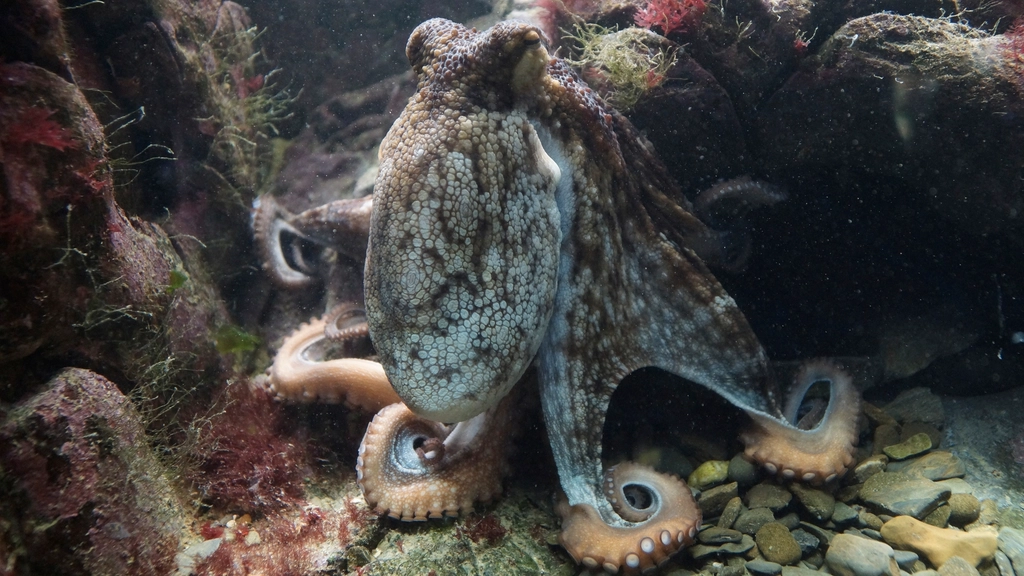
We’ve explored stealthy cats on the prowl and owls gliding silently through the night. Now it’s time to dive underwater, where one of nature’s best stealth artists doesn’t bother to sneak. It just vanishes. Meet the octopus.
Skin That Changes in a Blink
An octopus’s skin is packed with thousands of tiny organs called chromatophores. Each one is a small sac of pigment surrounded by muscles. When the muscles squeeze or relax, the sac expands or shrinks, and the color changes. An octopus can change its whole appearance in less than a second. Beneath the pigment cells, other layers reflect and scatter light, which adds shimmer and shades the pigment alone can’t make.
More Than Color: Texture and Shape
Matching color isn’t enough to hide against a rocky reef. Octopuses also change their texture:
- Papillae: Small muscular bumps that can rise on the skin, turning a smooth body into something that looks like rough rock, coral, or seaweed.
- Body posture: By flattening, curling, or stretching their arms, octopuses break up their outline so they stop looking like an octopus.
- Imitation: Some species, like the mimic octopus, copy other animals, such as flatfish and sea snakes.
Color-Blind, Yet a Master of Color
Here’s the surprising part. Most octopuses appear to be color-blind, with only one type of light-detecting cell in their eyes. Yet they match their surroundings very well. Scientists are still studying how they do it. One idea is that their skin can sense light directly, and another is that they read the brightness and patterns around them and respond to those.
Squeezing Through Anywhere
An octopus has no bones. Its only hard part is a beak, so it can squeeze through any gap larger than that beak. That makes it a great hider and a great ambusher. It can tuck into a crevice, wait with its skin matching the rock, and then grab a passing crab. When all else fails, it can release a cloud of ink, jet away, and change color to throw off a chaser.
Octopuses, Owls, and Cats: Same Goal, Different Tools
Cats use cushioned paws and patience. Owls use muffled feathers. Octopuses use color-changing skin and a flexible body. The goal is the same: stay unnoticed until the moment to strike, or the moment to escape. For more on the land and air versions, read our posts on the silent art of stealthy cats and how owls became nature’s stealth fliers.
Final Thoughts
Next time you’re near a tide pool or reef, look closely. That patch of rock might be looking back at you.
Feature image: “Camouflaging octopus close up,” marked with CC0 1.0.