Silent Wings: How Owls Became Nature’s Stealth Fliers

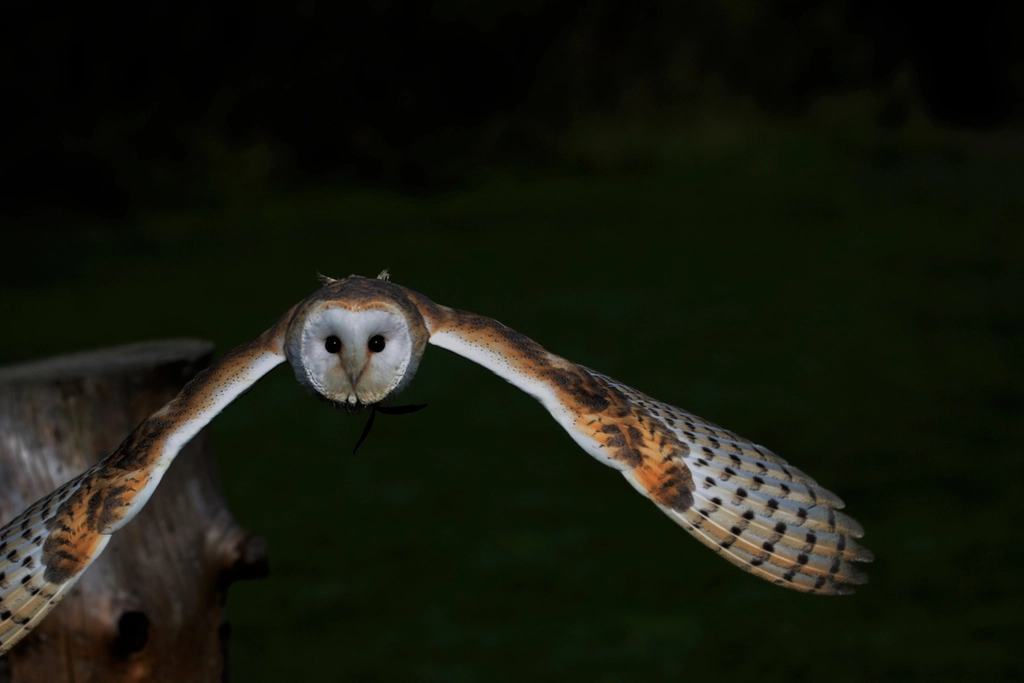
We’ve already talked about how stealthy cats sneak up on us. But cats aren’t the only stealth artists out there. Overhead, in the dark, another hunter is at work, and you will almost never hear it coming. Meet the owl, nature’s master of silent flight.
Owl Wings Built for Silence
Most birds make a whooshing, flapping sound in flight. Owls don’t. Their feathers are specially designed to cut down noise in three ways:
- Serrated leading edges: A comb-like fringe on the front edge of the wing breaks up airflow into smaller, quieter currents.
- Velvety surface: A soft, downy texture on the feathers absorbs sound and softens the rustle of feathers rubbing together.
- Fringed trailing edges: Frayed feather tips smooth out the air as it leaves the wing, reducing turbulence.
Engineers study owl wings for ideas to make quieter aircraft, wind turbines, and fans.
Slow, Light, and Gliding
Owls have large wings compared to their body weight. That lets them fly slowly and glide with very few wingbeats. Slower flight means less air noise, and fewer flaps means fewer chances to be heard.
Senses That Make the Owl Hunt Possible
Silent flight does the most good when the owl can also find its prey in the dark. Owls have that covered too:
- Exceptional hearing: The flat, dish-shaped face works like a satellite dish, funneling sound to the ears. In many species the ears sit at slightly different heights, which helps the owl pinpoint where a sound comes from, even under snow or leaves.
- Night vision: Large, forward-facing eyes gather lots of light. They are fixed in the skull, so owls turn their heads, up to about 270 degrees, to look around.
- Camouflage: Mottled brown, gray, and white plumage blends into bark and branches, so a roosting owl can be nearly invisible during the day.
Owls and Cats: Different Tools, Same Idea
Cats creep along the ground on cushioned paws. Owls glide through the air on muffled wings. The approach is similar: stay quiet, stay patient, and strike before the prey knows anything is wrong. Both hunters are at their best around dawn, dusk, and night. To see how the feline version works, read our post on the silent art of stealthy cats.
Final Thoughts
Next time you’re outside at night and think you hear nothing at all, remember that an owl may be gliding past. Silence is the sign that its feathers are doing their job.